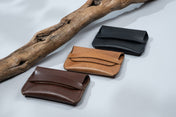

Barefoot Loafers That Actually Look Dressy: The Handmade Leather Slip-On
Most barefoot loafers ask you to choose. You can have the wide toe box and the thin, flexible sole — or you can have a shoe that looks right with tailored trousers. Rarely both. The barefoot world grew up sporty, so the moment you need something for the office, a wedding, or dinner, the options thin out fast. At Atlantis, the loafer is where we started from the other direction: a proper handmade leather slip-on first, built barefoot second. This is a look at what actually separates a dressy barefoot loafer from a casual one — and why the sole matters more than the marketing.
Can barefoot shoes look professional enough for the office?
Yes — but not all of them, and it's worth being honest about why. Performance-focused barefoot brands are built for movement: knit uppers, chunky lug soles, running-shoe silhouettes. Beautiful for the trail, out of place in a meeting. A loafer is a different object. It has a clean vamp, a low profile, and structured leather that holds a shape. When Atlantis makes a barefoot loafer, we keep everything that makes a dress shoe read as dressy — full-grain leather, tidy hand-stitching, a slim sole line — and quietly remove the parts your foot doesn't need: the raised heel, the toe spring, the narrow last. From across the room it looks like a classic loafer. Underfoot, it moves like bare feet.
What makes barefoot loafers different from regular loafers?
Three things, and they're structural, not cosmetic. Zero-drop: your heel and toes sit on the same level, the way they do standing on the floor, instead of being tilted forward by a built-up heel. A wide, foot-shaped toe box: room for your toes to splay rather than being funneled into a point. A thin, flexible sole: only as much shoe as needed, so your foot can actually feel and move. A conventional loafer usually fights all three — stiff shank, tapered toe, a bit of heel. Atlantis barefoot loafers keep the silhouette of the classic and rebuild the foundation underneath it.
Why do so many barefoot loafers still pinch — and how are Atlantis loafers shaped differently?
Because a lot of "barefoot" loafers are conventional lasts with a slightly roomier toe — barefoot as a label, not a shape. If the widest point of the shoe doesn't sit where your toes are widest, it still pinches. Atlantis loafers are lasted on a genuinely foot-shaped form, widest across the toes, so the leather follows your foot instead of asking your foot to follow the leather. And because the upper is real full-grain leather, it softens and molds to you over the first few wears rather than staying rigid. If you've given up on loafers because they crush your toes by lunchtime, that's usually a shape problem, not a you problem.
Are leather-soled barefoot loafers worth it, or should you choose rubber?
This is the honest trade-off, so here it is plainly. Atlantis offers two outsoles. A leather sole — hand-sewn to the shoe with no glue, over a water buffalo leather base — is 100% natural, thinner, more flexible, and gives that softer, closer ground feel; it's also the dressier, more traditional look, and slightly slipperier on wet floors. A rubber sole trades a little of that flexibility for more grip and weather-readiness. For an office shoe worn mostly indoors, many people love the leather sole; if you're commuting through rain or want more traction, rubber earns its place. Neither is glued on for looks — the leather sole in particular is stitched by hand, which is also why it can be resoled rather than thrown away.
What is the copper rivet in Atlantis loafers?
It's our small, physical take on grounding. Atlantis hand-hammers a copper rivet into the leather sole of its loafers, meant to act as a channel between your foot and the earth — the idea being to let the shoe echo, a little, what walking barefoot on the ground feels like. We'll be straightforward: the science on grounding (or "earthing") is still young, and we don't make medical promises. What we can say is that the copper rivet is real, it's hand-set into natural leather, and it's part of why an Atlantis loafer feels like more than just a good-looking shoe. (The rivet features on our loafers, oxfords, sneakers, slippers and high-ankle boots; it's left off sandals by default, since sun can darken the copper.)
How do you wear barefoot loafers to work without looking casual?
Keep the rest of the outfit structured and let the loafer do the relaxing. Full-grain leather in black or a deep brown reads as a dress shoe with tailored trousers or chinos; no-show socks keep the line clean. Because Atlantis loafers are hand-lasted from real leather, they take polish and age with a patina, the way a proper leather shoe should — so they look more at home in an office over time, not less. If your workplace leans formal and a slip-on feels too easy, the same craft in a lace-up lives in our barefoot oxfords; if you want the effortless dressy-casual slip-on, that's the heart of our barefoot loafers collection.
All in All
A barefoot loafer shouldn't feel like a compromise between your feet and your wardrobe. Zero-drop, wide toe box, thin flexible sole — kept inside the clean lines of a classic leather slip-on, hand-stitched with no glue, and finished with a hand-hammered copper rivet. That's the Atlantis take: only as much shoe as needed, made by hand, and dressy enough for the room you're walking into.
Explore the collection: Barefoot Loafers →
Are barefoot loafers good for wide feet?
Generally yes — a true barefoot loafer is built on a foot-shaped last with a wide toe box, so there's room for your toes to splay. Atlantis loafers are widest across the toes and use real full-grain leather that molds to your foot over the first few wears.
Can you wear barefoot loafers to the office or a formal event?
Dressy barefoot loafers can absolutely work for business-casual and many office settings. Choose full-grain leather in black or dark brown, keep the rest of the outfit tailored, and the wide toe box and thin sole stay largely invisible. For stricter formal codes, a lace-up like a barefoot oxford reads more traditional.
What's the difference between a leather sole and a rubber sole?
Atlantis leather soles are hand-sewn (no glue) over a water buffalo leather base — natural, thin, flexible, dressier, and slightly slipperier on wet floors. Rubber soles offer more grip and weather resistance for a little less flexibility. Choose leather for indoor/dress wear, rubber for commuting and traction.
Do Atlantis barefoot loafers have arch support?
No — like most barefoot shoes, they're zero-drop with a flat, flexible sole and no built-up arch, which is designed to let your foot's own muscles do the work. If you're transitioning from cushioned shoes, ease in gradually.
What is the copper rivet for?
It's a hand-hammered copper rivet set into the leather sole, intended as a channel for grounding/earthing — echoing the feeling of walking barefoot on the earth. Research on grounding is still young and we make no medical claims; the rivet is a genuine handmade detail, not a health device.